- About MAA
- Membership
- MAA Publications
- Periodicals
- Blogs
- MAA Book Series
- MAA Press (an imprint of the AMS)
- MAA Notes
- MAA Reviews
- Mathematical Communication
- Information for Libraries
- Author Resources
- Advertise with MAA
- Meetings
- Competitions
- Programs
- Communities
- MAA Sections
- SIGMAA
- MAA Connect
- Students
- MAA Awards
- Awards Booklets
- Writing Awards
- Teaching Awards
- Service Awards
- Research Awards
- Lecture Awards
- Putnam Competition Individual and Team Winners
- D. E. Shaw Group AMC 8 Awards & Certificates
- Maryam Mirzakhani AMC 10 A Awards & Certificates
- Two Sigma AMC 10 B Awards & Certificates
- Jane Street AMC 12 A Awards & Certificates
- Akamai AMC 12 B Awards & Certificates
- High School Teachers
- News
You are here
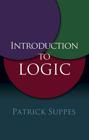
Introduction to Logic
Publisher:
Dover Publications
Publication Date:
1999
Number of Pages:
330
Format:
Paperback
Price:
14.95
ISBN:
0486406873
Category:
Monograph
[Reviewed by , on ]
Russell Jay Hendel
10/2/2016
The best book for a mathematical logic course strongly depends on the student audience. Mathematical logic addresses at least four very distinct student populations.
- Undergraduate mathematics students: For an introductory undergraduate mathematics course, a book like Mendelson’s Introduction to Mathematical Logic is still a standard. It covers the basics: propositional logic, first order logic with quantification theory, set theory and computability.
- Graduate level course: Joseph Schoenfeld’s, Mathematical Logic (Addison-Wesley) is still a classic. Besides the basic topics and a standard of rigor, it covers model theory, first order theory recursion theory, incompleteness and undecidability.
- Computer science: Computer science students have many needs not shared with other groups of undergraduate students. There are several books each addressing particular needs. Two that come to mind are Gallier’s, Logic for Computer Science, with its emphasis on automatic theorem proving, and Ben-Ari’s, Mathematical Logic for Computer Science, with an emphasis on the method of semantic tableaux as well as the topics of program verification including use of models and the Boolean Satisfiabilitiy Problem.
- Liberal arts and Philosophy majors: Besides the traditional undergraduate mathematical logical topics, a good text must discuss issues of inference and definition as well as supply more than the normal share of verbal problems, since the emphasis is not just on logic formalisms but on verbal modeling also.
Suppes’ book on logic, even though old (1957), is still quite good. It has the following features that are desirable in a course text:
- Traditional coverage: It covers traditional logic including propositional logic, (formal) inference, first order logic including quantifiers, sets and relations.
- Emphasis on inference: Throughout the book, there is a special emphasis on inference both verbal and formal.
- Rich verbal problems: The verbal problems are richer than the standard, “All men are mortal; Socrates is a man; Therefore Socrates is mortal.” For instance, Example 2 in Chapter 4 borrows the following verbal syllogism from Lewis Carroll:
No ducks are willing to waltz
No officers are unwilling to waltz.
All my poultry are ducks.
Therefore none of my poultry are officers.
- Leisurely pace: Throughout the book there is a leisurely pace with pedagogic analysis of methods. For example, for the example just cited, whose formalism requires 12 steps, the book recommends the following stages of analysis:
I: Translate verbal sentences to symbolic sentences
II: Eliminate quantifiers
III: Apply sentential methods
IV: Add a quantifier to the terminal conclusion
- Summarizing tables and graphs: The book is modern in flavor; there are many useful illustrative graphs (e.g. Venn diagrams) and summarizing tables, a feature one typically finds in modern books. For example, on page 34 there is tabular summary of inference methods. Beside modus ponens and modus tollens, there are eight laws: export-import, detachment, simplification, adjunction, absurdity, addition and syllogism. Ten other logic laws are added to the table such as the law of the excluded middle and the law of contradiction.
- Theory of definition: Perhaps a unique feature of the book (not found in other logic textbooks) is an entire chapter on the philosophy and approaches to definition. For example, the book presents three requirements for defining an n-ary relation. It also gives five approaches to division by zero.
- Short sections, adequate exercises: The book’s first part has 42 sections allowing one section a day in a 15 week, 3 day a week, course with room for exams. The first part of the book has 175 exercises many with several parts. The one fault I found with the book is the lack of answers (not even to odd-numbered exercises).
- Journal citations, other subjects: Although the book is leisurely, there is much advanced material in the exercises, with frequent citation of journal articles or reference to advanced topics. For example, several exercises treat the axiomatization of the Principia; other exercises verify the axioms of group theory. As a further example, the book presents Padoa’s principle on the independence of primitive symbols; it points out that Padoa’s treatment was inadequate and references a Bulletin of the AMS article by McKinsey, “On the independence of undefined ideas.”
Summary: Suppes’ book is an excellent text for i) introductory liberal arts courses, ii) philosophy majors and iii) weak undergraduate mathematical majors who require a leisurely pace. An instructor using this book would have a variety of verbal illustrations and exercises, adequate material and exercises, a leisurely pace, exposure to journal articles and ample material to discuss foundations.
Russell Jay Hendel, RHendel@Towson.Edu, holds a Ph.D. in theoretical mathematics and an Associateship from the Society of Actuaries. He teaches at Towson University. His interests include discrete number theory, pedagogy theory, applications of technology to education, problem writing, actuarial science and the interaction between mathematics, art and poetry.
|
PREFACE
|
||||||||
| INTRODUCTION | ||||||||
| PART I-PRINCIPLES OF INFERENCE AND DEFINITION | ||||||||
| 1. THE SENTENTIAL CONNECTIVES | ||||||||
| 1.1 Negation and Conjunction | ||||||||
| 1.2 Disjunction | ||||||||
| 1.3 Implication: Conditional Sentences | ||||||||
| 1.4 Equivalence: Biconditional Sentences | ||||||||
| 1.5 Grouping and Parentheses | ||||||||
| 1.6 Truth Tables and Tautologies | ||||||||
| 1.7 Tautological Implication and Equivalence | ||||||||
| 2. SENTENTIAL THEORY OF INFERENCE | ||||||||
| 2.1 Two Major Criteria of Inference and Sentential Interpretations | ||||||||
| 2.2 The Three Sentential Rules of Derivation | ||||||||
| 2.3 Some Useful Tautological Implications | ||||||||
| 2.4 Consistency of Premises and Indirect Proofs | ||||||||
| 3. SYMBOLIZING EVERYDAY LANGUAGE | ||||||||
| 3.1 Grammar and Logic | ||||||||
| 3.2 Terms | ||||||||
| 3.3 Predicates | ||||||||
| 3.4 Quantifiers | ||||||||
| 3.5 Bound and Free Variables | ||||||||
| 3.6 A Final Example | ||||||||
| 4. GENERAL THEORY OF INFERENCE | ||||||||
| 4.1 Inference Involving Only Universal Quantifiers | ||||||||
| 4.2 Interpretations and Validity | ||||||||
| 4.3 Restricted Inferences with Existential Quantifiers | ||||||||
| 4.4 Interchange of Quantifiers | ||||||||
| 4.5 General Inferences | ||||||||
| 4.6 Summary of Rules of Inference | ||||||||
| 5. FURTHER RULES OF INFERENCE | ||||||||
| 5.1 Logic of Identity | ||||||||
| 5.2 Theorems of Logic | ||||||||
| 5.3 Derived Rules of Inference | ||||||||
| 6. POSTSCRIPT ON USE AND MENTION | ||||||||
| 6.1 Names and Things Named | ||||||||
| 6.2 Problems of Sentential Variables | ||||||||
| 6.3 Juxtaposition of Names | ||||||||
| 7. TRANSITION FROM FORMAL TO INFORMAL PROOFS | ||||||||
| 7.1 General Considerations | ||||||||
| 7.2 Basic Number Axioms | ||||||||
| 7.3 Comparative Examples of Formal Derivations and Informal Proofs | ||||||||
| 7.4 Examples of Fallacious Informal Proofs | ||||||||
| 7.5 Further Examples of Informal Proofs | ||||||||
| 8. THEORY OF DEFINITION | ||||||||
| 8.1 Traditional Ideas | ||||||||
| 8.2 Criteria for Proper Definitions | ||||||||
| 8.3 Rules for Proper Definitions | ||||||||
| 8.4 Definitions Which are Identities | ||||||||
| 8.5 The Problem of Divison by Zero | ||||||||
| 8.6 Conditional Definitions | ||||||||
| 8.7 Five Approaches to Division by Zero | ||||||||
| 8.8 Padoa's Principle and Independence of Primitive Symbols | ||||||||
| PART II-ELEMENTARY INTUITIVE SET THEORY | ||||||||
| 9. SETS | ||||||||
| 9.1 Introduction | ||||||||
| 9.2 Membership | ||||||||
| 9.3 Inclusion | ||||||||
| 9.4 The Empty Set | ||||||||
| 9.5 Operations on Sets | ||||||||
| 9.6 Domains of Individuals | ||||||||
| 9.7 Translating Everyday Language | ||||||||
| 9.8 Venn Diagrams | ||||||||
| 9.9 Elementary Principles About Operations on Sets | ||||||||
| 10. RELATIONS | ||||||||
| 10.1 Ordered Couples | ||||||||
| 10.2 Definition of Relations | ||||||||
| 10.3 Properties of Binary Relations | ||||||||
| 10.4 Equivalence Relations | ||||||||
| 10.5 Ordering Relations | ||||||||
| 10.6 Operations on Relations | ||||||||
| 11. FUNCTIONS | ||||||||
| 11.1 Definition | ||||||||
| 11.2 Operations on Functions | ||||||||
| 11.3 Church's Lambda Notation | ||||||||
| 12. SET-THEORETICAL FOUNDATIONS OF THE AXIOMATIC METHOD | ||||||||
| 12.1 Introduction | ||||||||
| 12.2 Set-Theoretical Predicates and Axiomatizations of Theories | ||||||||
| 12.3 Ismorphism of Models for a Theory | ||||||||
| 12.4 Example: Profitability | ||||||||
| 12.5 Example: Mechanics | ||||||||
| INDEX | ||||||||
- Log in to post comments